Bridging the Gap Between AI Ethics and Design Practice
Role & Responsibilities
AI ethics research, design pattern analysis, Novo Nordisk AI guideline establishment, design system component development, documentation authoring, and best practice examples
Tools
Figma (design system components), Zeroheight (design system documentation platform)
Project Context
2 months • Collaboration with Design System Team • Includes comprehensive writing, documentation, examples, and do's and don'ts guidelinesNote: Illustrations were created by Design System Team. All strategic research, guidelines, and documentation represent my individual contributions.
While many AI guidelines exist for ethical AI design, Novo Nordisk designers lacked a common understanding and standardized components to design consistent AI products. Existing AI features across the portfolio had inconsistent look, feel, and ethical standards, creating several critical issues:
Inconsistent trust signals across different AI features
Unclear boundaries between AI recommendations and validated data
Ethical blind spots in AI communication patterns
User confusion about AI capabilities and limitations
I initiated and authored an extension to the existing design system, introducing comprehensive AI Guidelines and Components to bridge this gap.
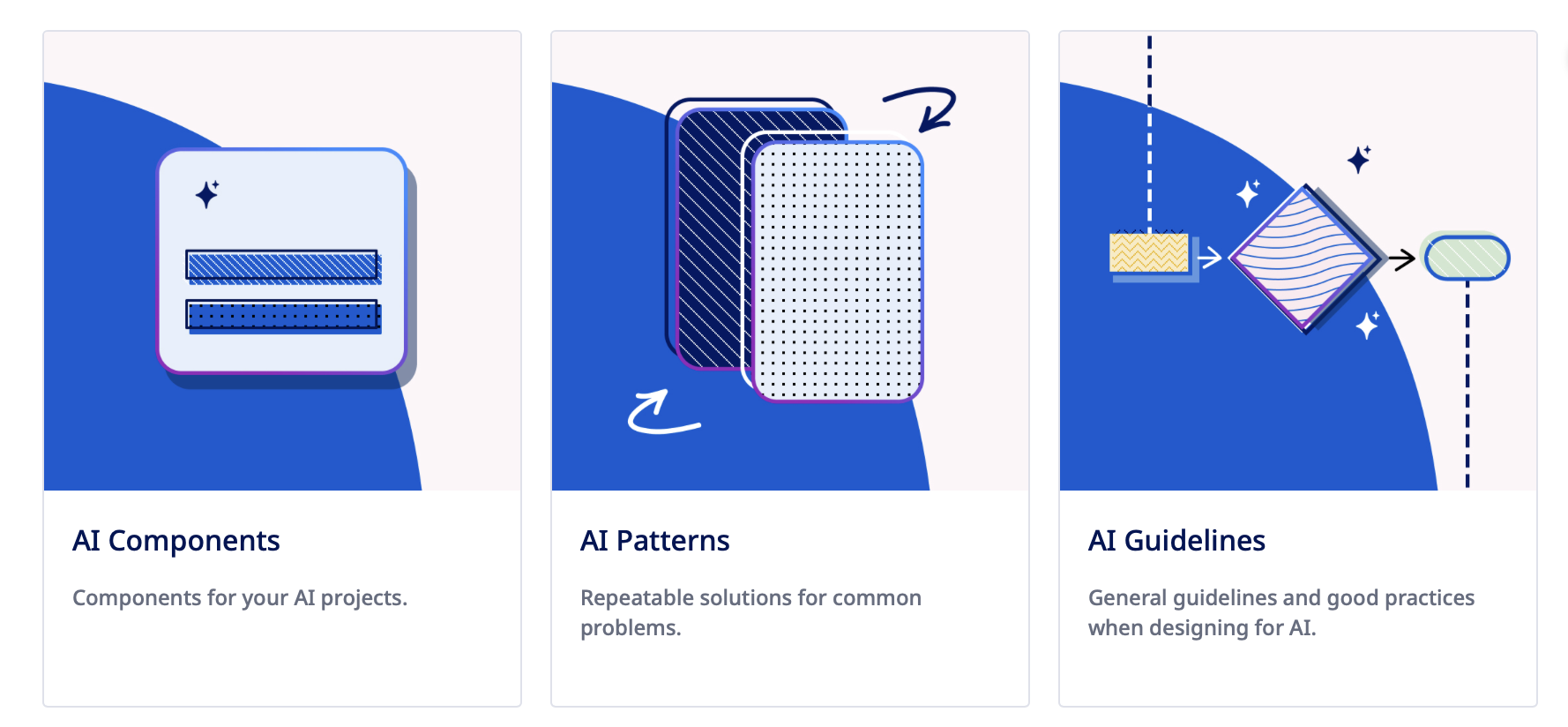
This screenshot shows how the AI Guidelines are structured.
Research & Discovery
Desk Research Foundation
Analysis of Microsoft HAX standards
Comprehensive review of industry conventions
Alignment work with existing NN AI Guidelines and product vision
Development of reusable Figma components that embody ethical AI principles
The Challenge
Guidelines alone are abstract and hard to implement consistently. Teams often struggle to translate high-level principles into concrete design decisions, leading to inconsistent AI experiences across products.
My Solution: Guideline-Component Pairing
Each principle is paired with specific design components to make the Ethical AI Guidelines actionable for designers.
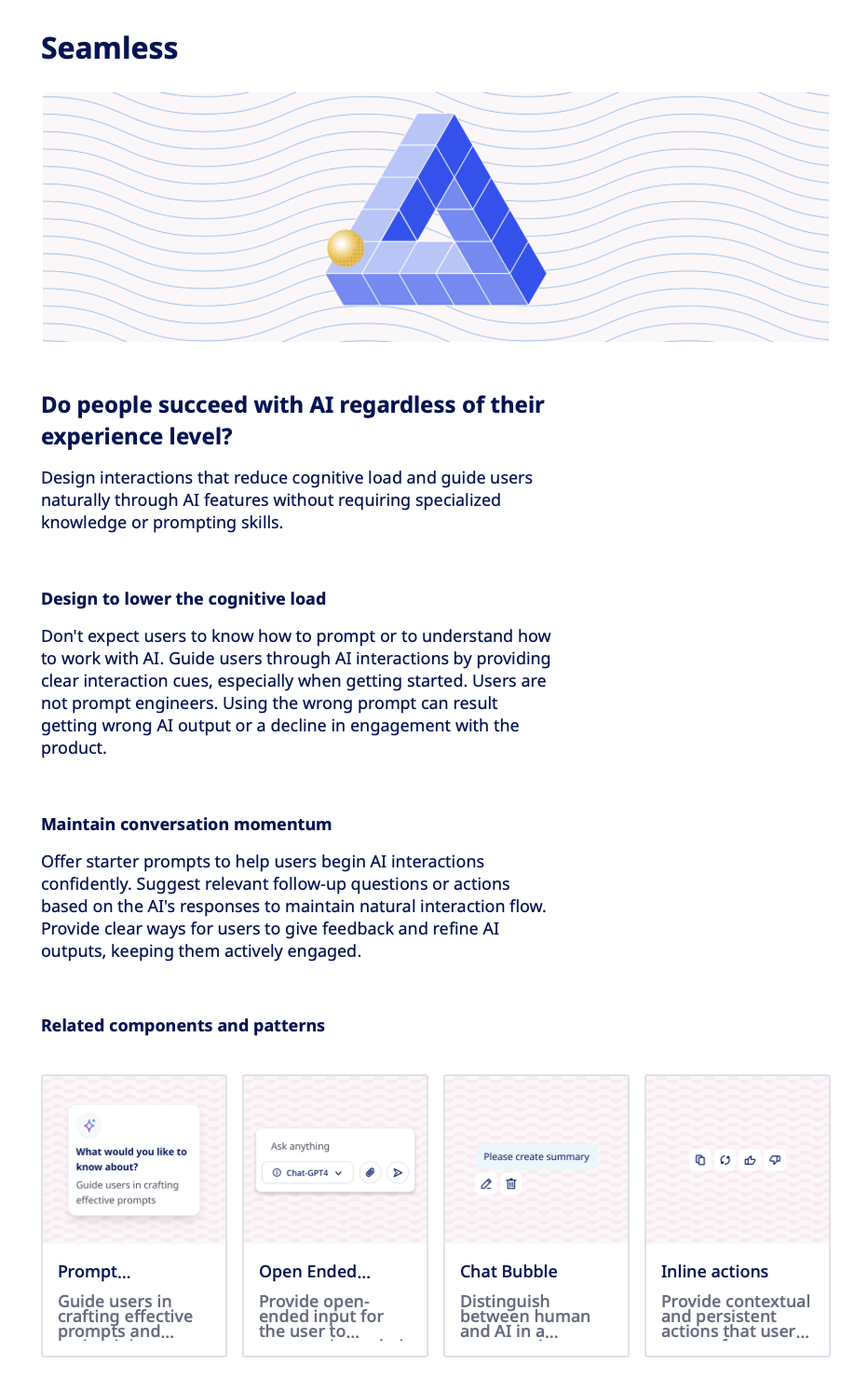
Ethical Guidelines and Vision
Each principle is paired with specific design components to make the Ethical AI Guidelines actionable for designers.
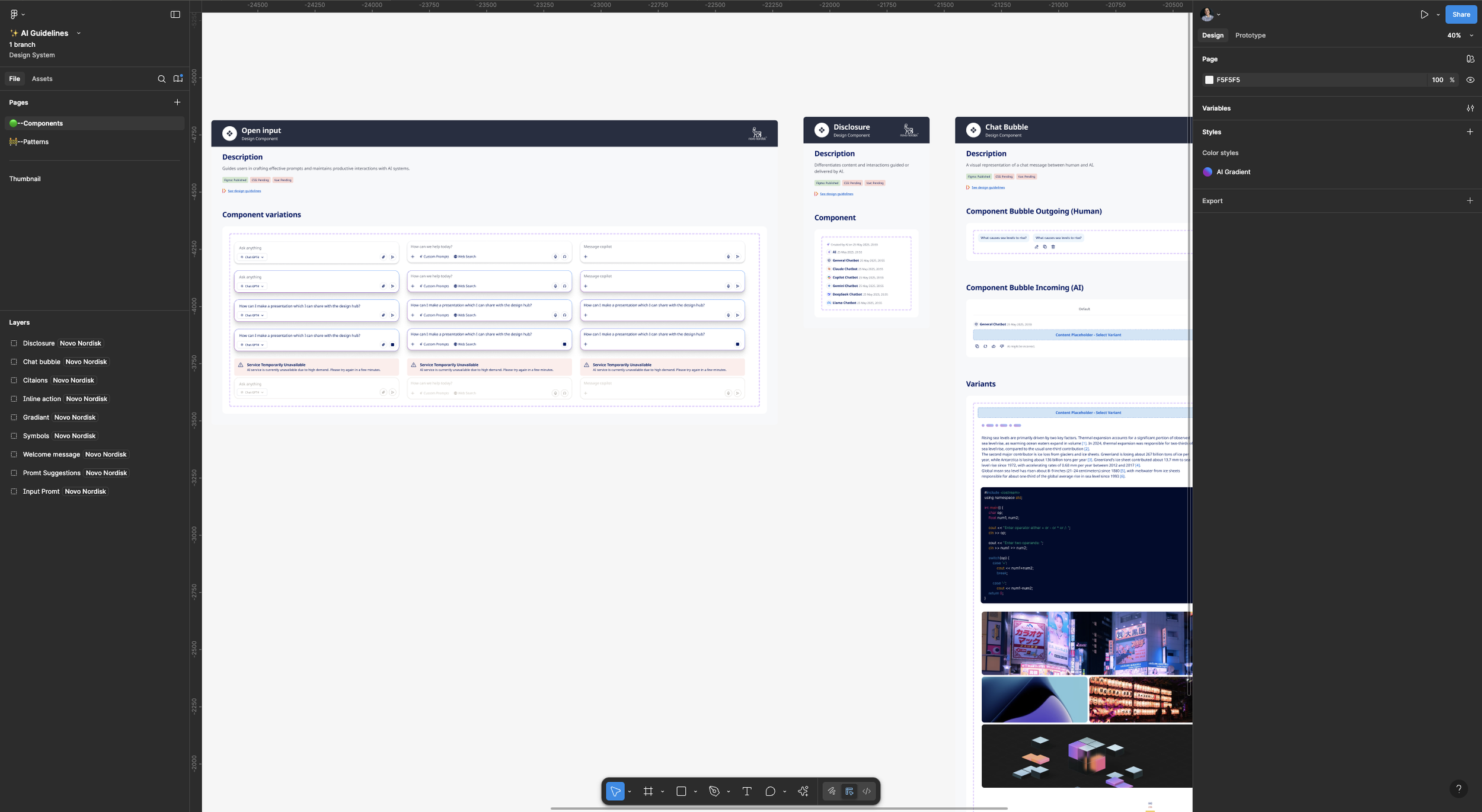
Figma Components
[Reference to image showing components in Figma]
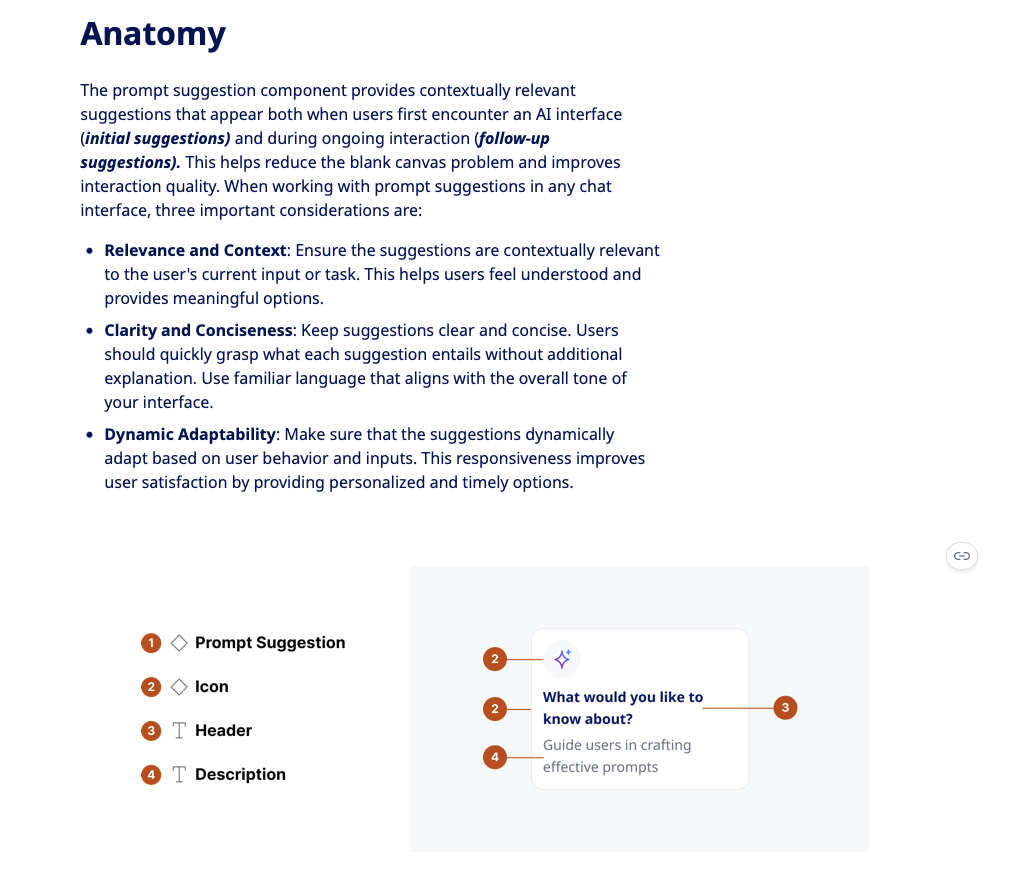
Documentation
Each component is thoroughly documented in Zeroheight, explaining the variants, anatomy, and proper implementation of the components.
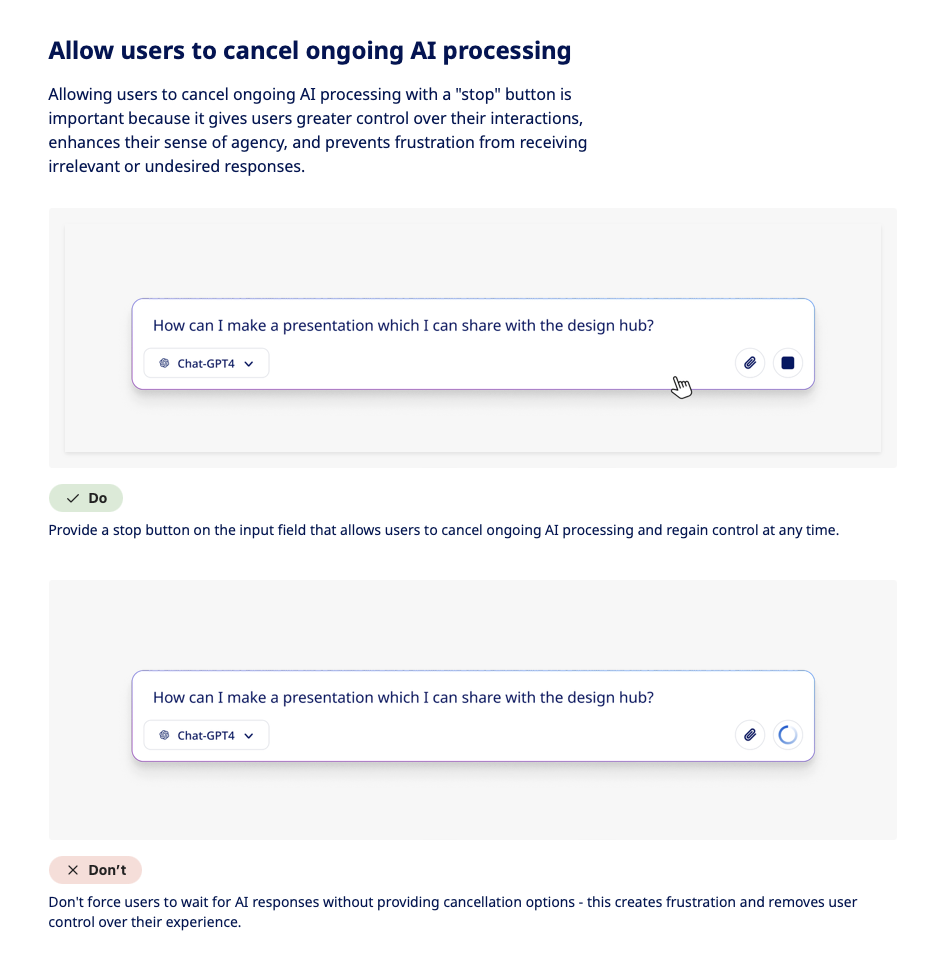
Do's and Don'ts
Through comprehensive do's and don'ts examples, best AI design practices guide designers on how to apply the components effectively in their product design.
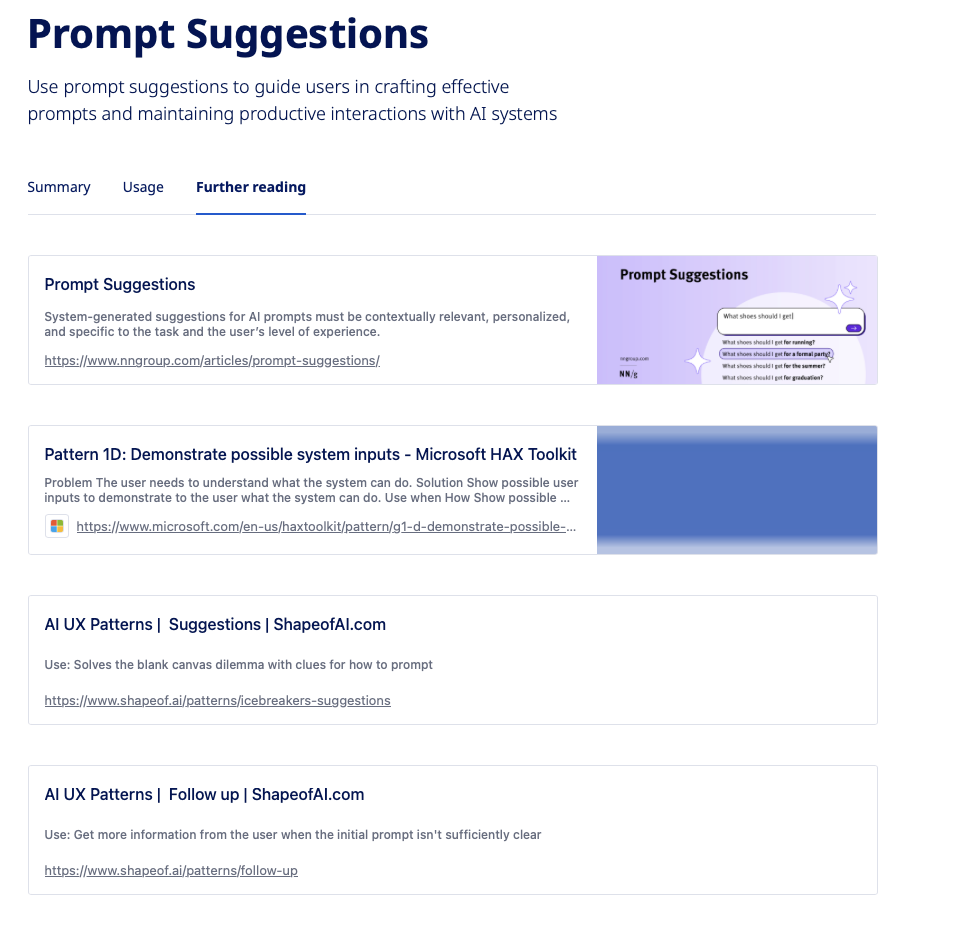
Further Reading
A curated further reading section is provided for each component, allowing designers to deepen their understanding of AI design principles.
Core Philosophy
When creating AI solutions, the primary focus should be on serving the people who will interact with them. This requires building systems that are transparent, responsible, and trustworthy, while always including humans in the loop throughout the product lifecycle.
Foundation Principles
Maintaining transparency to build user trust
Ensuring AI outputs are explainable and verifiable
Creating seamless interactions that empower users regardless of their AI experience
Integrating AI contextually into existing workflows where it genuinely adds value
Keeping humans in control through design patterns that enable human oversight to validate AI output